
In Retrospect…
2nd Quarter 2026 Commentary • Kori Allen, CFP®
During mid-June’s celebrations for the Obama Presidential Center, former President Obama spoke to former staffers and alumni: “I think nostalgia implies this sentiment that there’s this thing in the past that was somehow golden and better, but is unattainable now,” he said. “And it lets us off the hook, because it makes us feel like, ‛Well, you know, that was wonderful, but now, this is the reality, and there’s not much we can do about it.’”
Of course, he was speaking about civic life and engagement. But it reminded me of the places I’ve been in my career, and how the speed of change continues to accelerate in financial services. It is not uncommon for today’s prognosticators to suggest that most of our human-performed work will give way to artificial intelligence. Looking to the past is often a habit of all of ours—somehow that past was better, simpler, wiser—as we embrace or passively accept a new status quo.
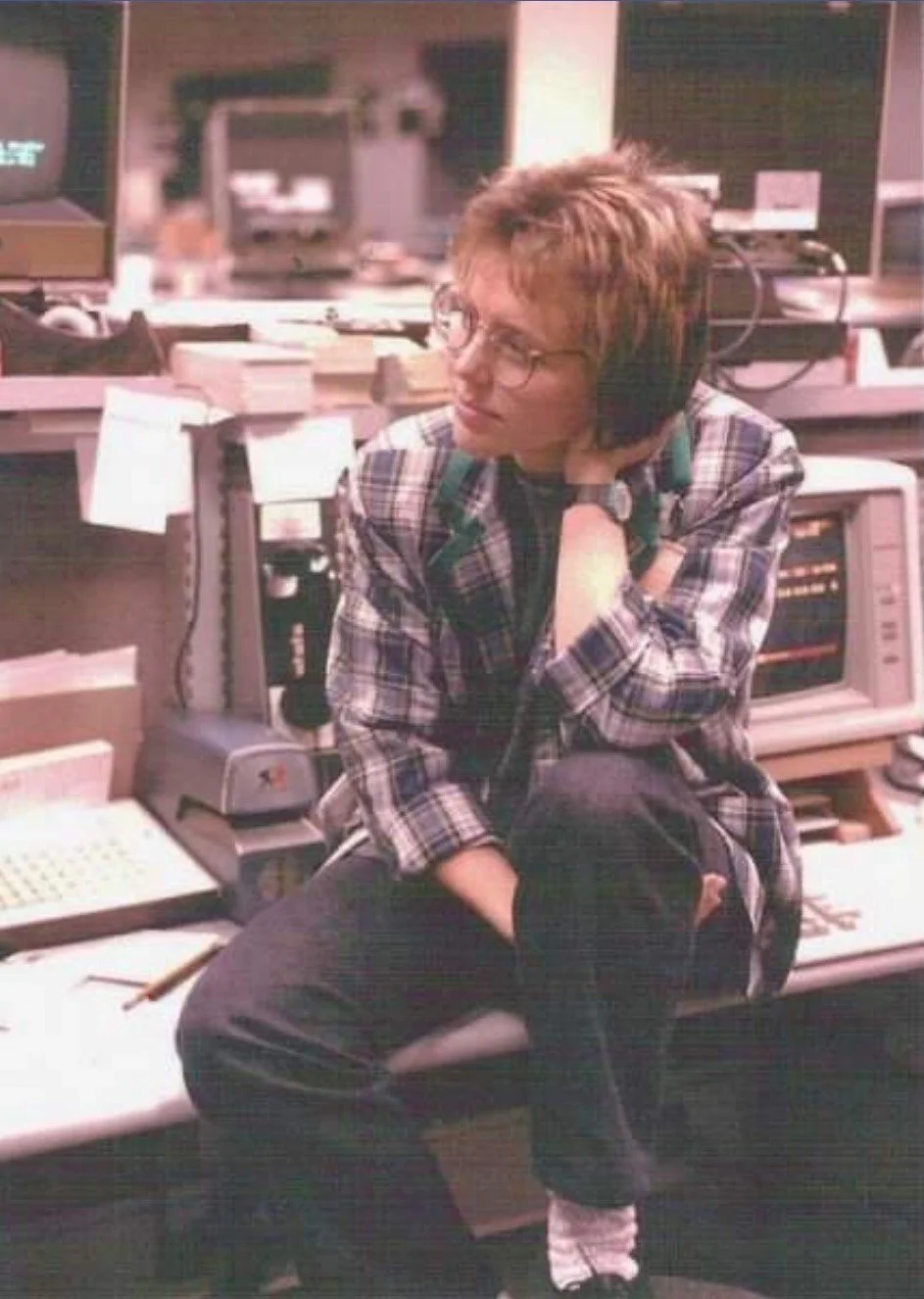
Kori on the floor of the Pacific Coast Options Exchange, with a few “Quotrons” visible in the background, San Francisco, circa 1986.
In 1985, I began work on the Pacific Coast Options Exchange in San Francisco. It was an open outcry exchange, similar to the Chicago Board Options Exchange, where market makers and brokers yelled bids and offers and Market Quote Terminal Operators typed these prices into simple machines called “Quotrons.” The Order Book Official would announce and then report who bought and sold contracts. Later on, at day’s end, blue and red paper tickets (buys and sells) were matched up in a back room, and requests for payment or delivery were forwarded on, by computer, to the firms and the members.
More nostalgia: in 2006 when my cohort took the exam to become Certified Financial Planners®, we went to a classroom and used pen and paper for the day-and-a-half proctored test. Results took a few months to be determined and reported back. In contrast, today that test is taken online and the results are immediate, with official, verified results arriving within four weeks.
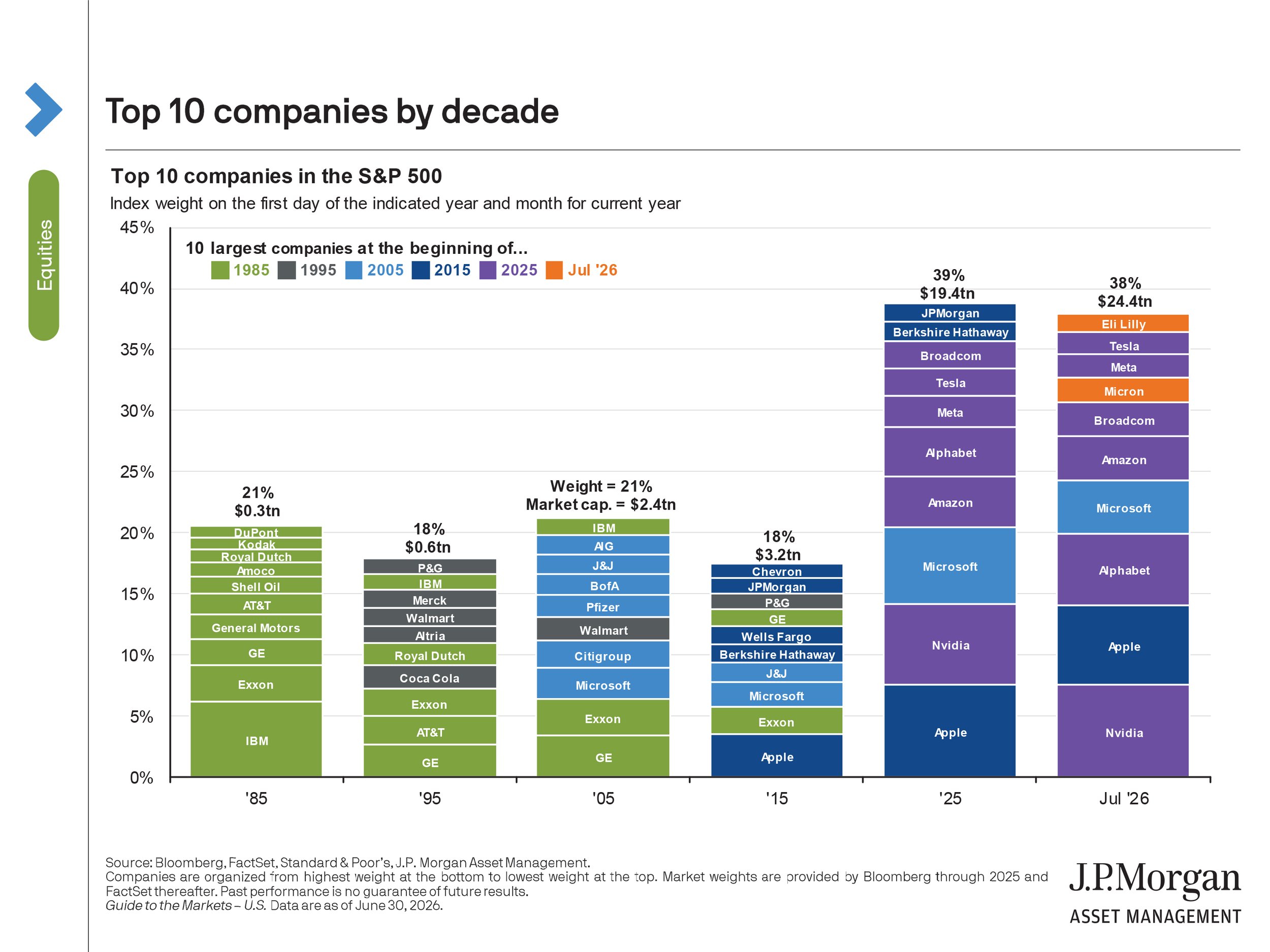
Rapid technological advancements are changing the way all services—financial and otherwise—are evolving. And this is reflected in the markets in real-time. There are stocks that appear over-valued, and they are in the sectors primarily responsible for this pace of change—fueled by AI. Inflation and comparatively slower growth have dampened returns in many other industries. You might have heard “the market climbs the wall of worry” or that the market is over-valued, or that it feels like the “dot-com” bubble. While it is human nature to look to our version of the past and apply it to current circumstances, the real picture is usually more nuanced: Some established artificial intelligence companies have revenue that is helping fuel their phenomenal growth. Their current earnings may not be dependent upon their future AI products or services. This is part of why analysts say “this time is different” when comparing today’s euphoria to the dot-com era. (Remember Pets.com or Kozmo?) What might not be different is human nature—investors chase promise even when not every company in this AI “build out” will be profitable. JP Morgan’s graph helps remind us of this perspective:
It is also true that humans can’t always be replaced, as a recent New York Times story illustrates:“Customers are Giving Billions to Scammers. Tellers Are Intervening.” (June 7, 2026; https://www.nytimes.com/2026/06/07/your-money/chase-bank-tellers-scams.html). AI models might predict behavior, but it is derived from a historical lens. Living, breathing humans operate on more than just data: wisdom, knowledge, emotion, intuition and creativity. We are nostalgic and traditionally educated; it is lived experience and emotional attunement that makes us distinctly different from current AI models.
Financial services can be transactional in nature, and certainly consummating trades is more efficiently performed with computers than by using paper tickets and shouting across a room. However, similar to the bank tellers in the Times story, we advisors bring more to the table. We continue to believe that understanding our clients personally—not simply through metrics—leads to long-term success that isn’t measured by bench-marks. We intend to judiciously embrace and evolve with technology, while continuing to value long-standing client relationships. It is not nostalgia. It is meaningful and wise.
“Imagination is more important than knowledge. For knowledge is limited, whereas imagination embraces the entire world, stimulating progress, giving birth to evolution.”
—Albert Einstein
**The views expressed represent the opinions of Pearl Wealth, LLC as of the date noted and are subject to change. These views are not intended as a forecast, a guarantee of future results, investment recommendation, or an offer to buy or sell any securities. The information provided is of a general nature and should not be construed as investment advice or to provide any investment, tax, financial or legal advice or service to any person. The information contained has been compiled from sources deemed reliable, yet accuracy is not guaranteed.
Additional information, including management fees and expenses, is provided on our Form ADV Part 2 available upon request or at the SEC’s Investment Adviser Public Disclosure website. www.adviserinfo.sec.gov.
Past performance is not a guarantee of future results.